Product studio · software & design agency
Running a product studio — from brand systems to shipped software
A 360° software, design, branding and consulting studio building digital products across Web2, Web3, SaaS and AI-assisted workflows — where founder-level ownership meets client delivery.
- Role
- Co-Founder · Product & Creative Direction
- Client
- Own studio
- Period
- Ongoing
- Platforms
- Web · Mobile · Backoffice
- Tools
- Figma · Next.js · Claude Code · Trello / Jira
- Status
- Operating
Overview
DecentraHubs is the container for everything else in this portfolio: the studio through which ePOINT product work, BestPrime direction, Kambiyom and Memesis ventures, and client web work all run. Co-founding it means owning not just design, but the operating system of delivery — how work is scoped, priced, structured, built and shipped.
The studio's doctrine is written down and enforced: understand the business before building, refuse to build what shouldn't exist, and treat product thinking — not deliverables — as the actual service.
Scope
- Service & delivery architecture
- Product direction across client work
- Brand & creative direction
- Proposal, estimation & requirements systems
- AI-assisted delivery workflows
The challenge
Small studios die from unscoped work and unclear positioning. The challenge is systemic: turning vague client ideas into structured requirements, honest estimates and buildable products — repeatedly, across very different domains — without a big-company process apparatus.
My role
Co-founder and primary product/creative decision-maker: service architecture, delivery standards (requirements, business analysis, proposal and estimation templates), design doctrine, and hands-on product direction across engagements.
The bridge role: between clients and engineering, between business goals and interfaces, between what's asked for and what should actually be built.
Product decisions
3 that shaped the productCodify the studio's thinking into a written doctrine — decision filters, playbooks, delivery standards.
WhyJudgment that lives in one founder's head doesn't scale and doesn't survive busy weeks.
ImpactA documented operating mode: a four-layer decision filter for what to build, domain playbooks (marketplace, loyalty, affiliate, AI, blockchain), and templates that make requirements and proposals consistent.
Make 'refuse to build' a formal option in every engagement.
WhyBuilding the wrong thing competently is still failure — and clients remember who told them the truth.
ImpactEngagements start with business analysis that can end in 'don't build this yet' — which converts into trust and better-scoped follow-up work.
Adopt AI-assisted execution as studio infrastructure, not experiment.
WhyA small senior team with strong judgment plus AI leverage can deliver at a level that used to require much larger teams.
ImpactClaude Code and structured AI workflows run through prototyping, documentation, QA planning and frontend builds — with human product judgment as the control layer.
Studio output
The work the studio ships
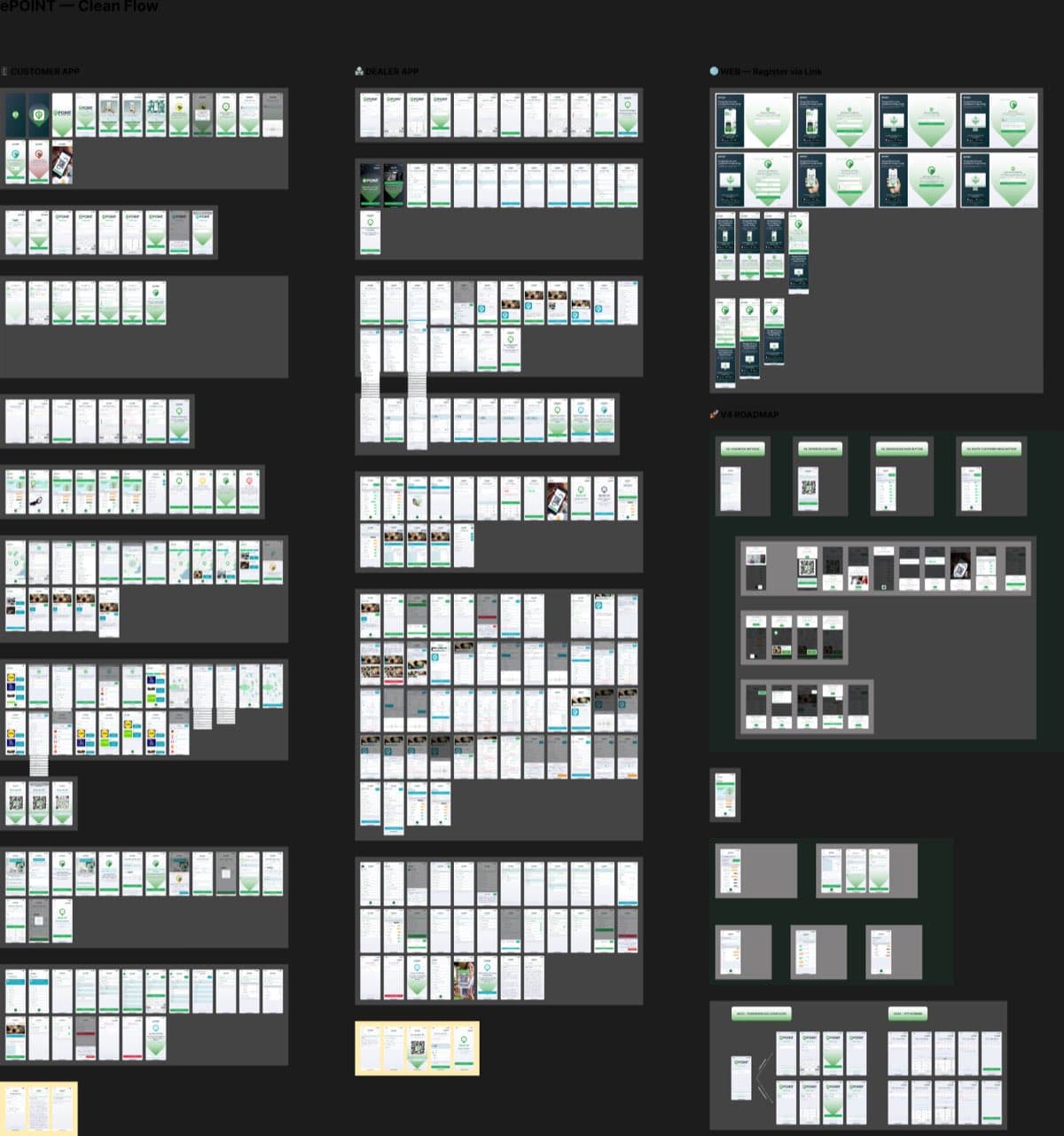
Flagship product work: the ePOINT ecosystem and its v2 design system. Venture and concept work: the Kambiyom marketplace concept and the Memesis World venture. Advisory: brand, interface and product consulting including Edu3Labs in the education/Web3 space. Web work: brand sites from single-file showcases to an immersive Next.js + React Three Fiber experience.
The common thread is ownership depth — the studio doesn't hand off pictures; it stays through build, QA and store delivery.
Outcome
verified, qualitative where honest- 01
A functioning studio with documented doctrine, delivery standards and playbooks — product thinking as a system, not a slogan.
- 02
A portfolio of shipped and in-flight products across loyalty, partner networks, marketplaces and Web3.